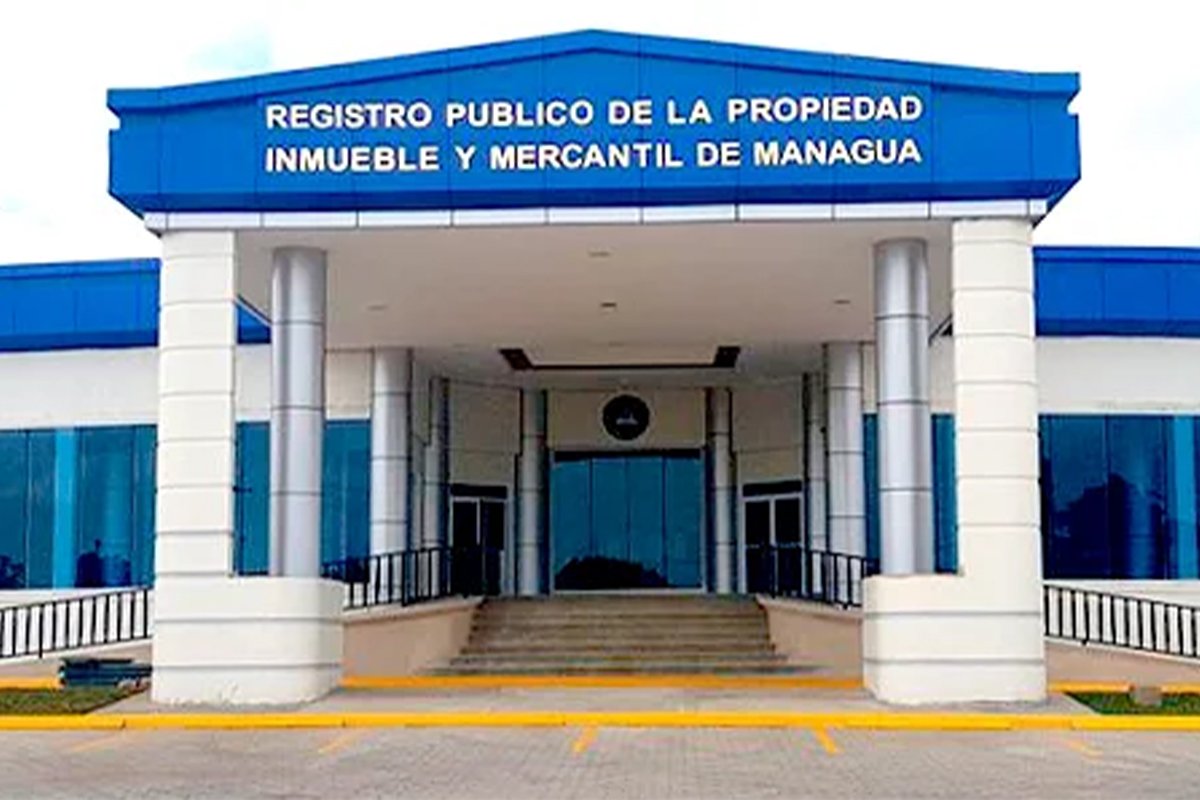
On August 25, Law No. 1035, “Law of Reform to Law No. 698, General Law of Public Registries and to the Commercial Code of the Republic of Nicaragua,” was published in La Gaceta, Official Gazette. Through this law, the Registry of Ultimate Beneficial Owners of Commercial Companies (hereinafter RBF) is created as a new branch within Nicaragua’s National Registry System (SINARE).
According to the reform, the RBF will have the following functions:
- Register the information on beneficial owners declared by each commercial entity.
- Ensure the integrity, confidentiality, traceability, and security of the data it safeguards.
- Guarantee access for interested commercial companies and competent authorities to the beneficial ownership information.
The creation of the RBF, according to the explanatory memorandum of the bill, is part of an effort to
“continue closing the gaps and loopholes through which organized crime may carry out its activities…”
and to comply with the recommendations of the Financial Action Task Force (FATF), one of which establishes that “Countries must take measures to prevent the misuse of legal entities for money laundering or terrorist financing. Countries must ensure that adequate, accurate, and timely information on the beneficial ownership and control of legal entities is available and can be accessed promptly by competent authorities.”
The significance of the creation of the RBF lies mainly in the fact that, as of the publication date of Law No. 1035 (August 25, 2020), commercial entities are required to report and register their beneficial owners with the registry. This information will be public and must be updated periodically. In this regard, Law No. 1035 explicitly states, “With respect to commercial companies existing prior to the publication of this law, they must submit the corresponding information on their beneficial owners according to the provisions issued by the National Registry Directorate.”
Now, the question arises: What is a beneficial owner? Law No. 1035 does not define the term; therefore, we must refer to other laws that do. In this regard, Law No. 977, “Law Against Money Laundering and Terrorist Financing,” provides the following definition of a beneficial owner:
Beneficial owner:
- The natural person or persons on whose behalf a transaction is carried out.
- The natural person or persons who ultimately own or control a client, including those who exercise ownership or control through a chain of ownership or by other means of control distinct from direct control.
- The natural person or persons who ultimately own or control a trust, including those who exercise ownership or control of the trust through a chain of ownership or by other means of control distinct from direct control, as well as those on whose behalf a trust operation is carried out.
- The natural person or persons who are the ultimate beneficiaries within a life insurance policy or other investment-linked insurance policy. In the case of sections “b” and “c,” the term “ownership” refers to both actual and legal ownership. Likewise, the term “control” refers to the ability to make and impose significant decisions, whether exercised formally or informally.
Based on the above, we can conclude that all commercial entities must declare and register their beneficial owners—that is, the natural persons who ultimately own or control such entities.
However, the reform to the law is primarily limited to the creation of the RBF and does not establish provisions regarding its operation.
According to the above, these provisions will be issued by the Special Registry Commission. In this regard, the National Registry Directorate, through a circular dated August 24, 2020, indicated that it has begun a review and adjustment process to incorporate into its regulations the fundamental aspects related to the RBF, including deadlines, procedures, costs, and other relevant matters.
In conclusion, although there is now a legal obligation to register the beneficial owner of commercial entities, the means for fulfilling this obligation have not yet been made available to the obligated parties (the commercial entities).